1 "TAKE NO AS A QUESTION "

Tuesday, 23 April 2013

Young professionals choose MNCs for better pay and work-life balance

Young professionals choose MNCs for better pay and work-life balance

Young professionals choose MNCs for better pay and work-life balance
According to a recent survey conducted by Jobbuzz, young Indian professionals prefer to work for multinational corporations. Out of a total number of 8,000 respondents, approximately 22% were of the opinion that MNCs offer a better pay package; around 1000 respondents say it is because of a better work-life balance; and another 1300 said they prefer multi-nationals because of the well defined career path. Other reasons why young professionals prefer working for MNCs are opportunities to work abroad, organised processes, lesser politics, and the scope to work with smarter people.
While Indian companies are going global, there are still some aspects that they need to address to become ‘employers of choice’, according to the survey. For young professionals today, a good place to work is more than taking just a six digit salary; it is about a better learning experience, peer-to-peer interaction, and most importantly a steady growth path. MNCs, according to the survey, focus on all these aspects to provide a wholesome work environment.
According to employee perception, as reflected by the Jobbuzz survey, in Indian companies growth and industry exposure is often limited, MNCs however prove to be worthy in terms of providing adequate training and development programmes; encourage employees to gain international work experience; and last but not the least offer handsome pay package and perks.
Better Salaries & Perks
Explains Deepak Kaistha, managing director, Planman Consulting, “The lucrative schemes and policies of international MNCs surely fascinate the Indian employees. It is also believed that one’s lifestyle statement undergoes a sea change when he is associated with an international organisation.”
Better work-life balance
It is evident from the JobBuzz survey that a large percentage of Indian employees also believe that MNCs provide a better work-life balance. Suman Rudra, HR Head, NCR India is also of the opinion that the MNCs not only support flexi work, but often allow employees to work from home.
In our fast moving life where everything revolves around deadlines, many professionals face problems in balancing their personal and professional needs. Kaistha says, “MNCs have always been particular regarding their employee satisfaction. This is the reason why their offices are not only a place to work, but also a recreational hub after tiring office hours.”

Focused career path

A company might be giving its employees all the perks that are required, but are they also offering a positive growth path for them? Jaideep Shergill, CEO MSL Group, says, “In an MNC, employees get to move between functions, roles, and departments within a short span of time. This scope is missing if the company is based out of only one location. MNCs allow their employees to not only move within the organisation, but also externally, resulting in a better career growth path.”
Rudra points out some of the other aspects multi-national corporations provide:
-A professional work environment based on ethics and value system
-International career opportunities
-International learning opportunities like training cross geographic projects and multi country experience
Also,
-The workplace has strong multicultural work ethos and supports equal opportunity
-They are diversity focused and are sensitive to their needs, gender and other types
-Focus on performance and result orientation than people preference
-Attracts women employees as they encourage grooming women managers and leaders
As Indian professionals get more global exposure, in terms of best practices that are brought into the country by MNCs of Indian and non-Indian origin, it is a matter of time before other employers take note and start adopting these practices to become ‘great places to work’.

Brilliant ways to get a flatter belly


Brilliant ways to get a flatter belly


Brilliant ways to get a flatter belly
Get a flatter belly

Worried why all your ab exercises aren't showing the results you want? Maybe you are missing something. These simple tips will make your workout work better for you...

Begin with small moves
Begin easy — you cannot go on a cyclothon before you know how to cycle and similarly you cannot do 50 crunches the first time you learn how to do it. Work a small range — hold a plank for 20 seconds or do only 10 crunches in the beginning.

Warm enough?
Some people do not realise the importance of a proper warm up before a workout session, and believe that it is a waste of time. But, warming up your muscles prevents injury. A little walking, marching on the spot, rotating your mid-section gently, bending forwards to touch your toe, etc can warm up your core for an ab workout.

Breathe
Oxygen is important for your core muscles, if you want them to work their full capacity. So, don't hold your breath. Inhale when you are doing the easy part of the move, and exhale when you have to exert force.

For example — exhale when you are on the way up while doing crunches.

Don't get distracted
If you thought only your muscles play an important role when it comes to doing those push ups, you were wrong — our mind too plays an important part in workout schedules. So, avoid watching TV while exercising, instead concentrate on the muscles, and feel them move, stretch and contract. It will improve your results.

Be an all rounder
When you want a flat belly fast, the trick is to do movements in all dimensions. Don't just concentrate on crunches — include other exercises and asanas like Vakrasana that help you twist and turn your body.

Balance
For strong abs you should try to incorporate some balance into your routine. Even something as simple as — standing on one leg while the other feet rests on your thigh, arms raised above your head and palms touching — the Vriksasana or the Tree pose.

Rest it out
Your workout will only work for you if you give yourself adequate rest. Overworking your abs won't help. The rest will help the muscles recover and will make them stronger.

Slow and steady
Speeding up your workout will not help. Slow down and you will burn fat better.

Try yoga
Sick of gymming? Try yoga. Most yoga poses are excellent for strengthening the core. Yoga not only exercises your mind along with your body, but it makes you flexible and reduces your stress-levels.

Weight matters
Your abdominal muscles could do better if they are challenged with some weights. With a kilo or so thrown in, your regular workout can give you even better results.

Pay attention to what you eat
If you want washboard abs, you need to eat right — just going through gruelling gym routines day after day, will not work. A city-based nutritionist says, "Make sure your diet consists of plenty of protein, low fat milk and milk products, fruits and fresh vegetables.

Samsung Galaxy S4 to launch in India on April 26


Samsung Galaxy S4 to launch in India on April 26


Samsung Galaxy S4 to launch in India on April 26
Samsung will launch its flagship smartphone – Galaxy S4 – In India on April 26.
NEW DELHI: Samsung will launch its flagship smartphone - Galaxy S4 - In India on April 26. The launch is part of the global rollout of the device. It will go on sale in other markets like the US and some European countries on the same day.

For now, Samsung hasn't revealed any India price but the phone is expected to cost a little more than Rs 40,000.

Samsung has two versions of Galaxy S4 - one powered by a Qualcomm S600 processor and another powered by Samsung's 8-core Exynos processor. In India, the Korean company is expected to launch the Exynos model.

Galaxy S4, which is powered by Android operating system, is the successor to Galaxy S III. Samsung hopes to sell around 10 million units of its top smartphone within one month of launch.

In India, the company is the top smartphone vendor. According to CyberMedia Research, Samsung had a share of 43% in Indian smartphone market at the end of 2012.

Currently, Samsung and Apple are fighting a bitter war in Indian market. Last year Apple bolstered its operations in India. This year it has launched several aggressive schemes, including price cuts on older models of iPhones, to increase sale of its smartphones. Samsung has responded by introducing its own schemes, including cash back and zero interest EMIs for several models of Galaxy phones.

The Korean company hopes Galaxy S4 will help it stay ahead of Apple as a new iPhone is not expected to launch anytime soon.

When it hits the market, Galaxy S4 will also compete against HTC One, a phone that has garnered much praise among technology reviewers for its design, camera performance and a few unique features like Zoe. HTC One has been priced at Rs 42,990. It will be available in Indian market by the end of this month.

Despite loss, Dravid feels Royals were exceptional


Despite loss, Dravid feels Royals were exceptional


Despite loss, Dravid feels Royals were exceptional
Rahul Dravid said another big positive from the match was all-rounder Shane Watson's fiery 61-ball 101.

CHENNAI: They might have ended up on the losing side but Rajasthan Royals captain Rahul Dravid feels his team was "exceptional" against the Chennai Super Kings given that the conditions were not too ideal for the bowlers in their IPL match.

"Throughout the innings, we executed our plans with the ball well. I thought it was a pretty good score to defend...it was not easy in terms of bowling conditions as the ball was getting wet and sweating," Dravid said after CSK chased down an imposing 186-run target to hand RR a five-wicket defeat.

"I thought the performance was exceptional today and particularly Jimmy Faulkner with the ball was superb show," he added referring to the bowler's effort of 3 for 20.

Dravid said another big positive from the match was all-rounder Shane Watson's fiery 61-ball 101, which was laced with half a dozen sixes and an equal number of fours.

"When someone plays an innings like that, you actually try being on the winning side. Binny was also very good to us giving the impetus in the last overs. I thought 185 was a really good score," he said.

The affable veteran was also lavish in praise of the opposition.

"I think the credit should go to Super Kings as well. They batted well in the middle phase and they had some dangerous players towards the end," he said.

Psy's 'Gentleman' tops YouTube charts with 38M views in one day

Psy's 'Gentleman' tops YouTube charts with 38M views in one day

The question is now: will "Gentleman" beat out "Gangnam Style" for overall views?
Views of Psy's "Gentleman" vs. "Gangnam Style" videos over their first 50 days on YouTube.
With the same searing beat, ridiculous lyrics, and tongue-in-cheek antics, South Korea's Internet phenomenon Psy is breaking charts again with his new single "Gentleman."
YouTube announced Monday that "Gentleman" is giving "Gangnam Style" a run for its money by setting the record for getting the most views in one day ever. On April 14, "Gentleman" hit more than 38 million views. And, after only being up for about a week, the video has a total of nearly 204 million views.
"From a stats perspective, it's one of the biggest music video launches the web has ever seen," YouTube Trends manager Kevin Allocca wrote in a blog post Monday. "For some added perspective, 'Gentleman' was seen 100 million times in less than 4 days in regions all over the world, a milestone that it took 'Gangnam Style' nearly two months to achieve."

"Gangnam Style" broke YouTube records by becoming the most viewed video of all-time, it now has a staggering 1.5 billion views. It was also the first video to ever even hit 1 billion views. But, now, it's looking like "Gentleman" is making gains on "Gangnam Style." According to YouTube, Psy's new hit debuted at No. 1 on YouTube's music chart last week -- bumping "Gangnam Style" down to No. 2.
The previous single-day record was set by KONY 2012 last March with 31 million views in one day, according to YouTube. This video has a far different subject matter than Psy's dance beats; KONY 2012 tells the controversial tale of filmmaker Jason Russell's personal mission to take down Joseph Kony, the Ugandan leader of the guerrilla group Lord's Resistance Army.

Google Now could be Google's new home page

Google Now could be Google's new home page

iGoogle isn't long for this world, but that doesn't mean that Google won't have a personalized home page for you.
A Google-made extension appears to port Google Now beyond Android via Chrome.
A Chrome browser extension and some code hidden on a Web site indicate that Google might replace iGoogle with a desktop version of Google Now.
The unconfirmed report on Google Operating System, a blog that's not affiliated with Google, highlights code on a Web page that it says Google uses to test new features. In this case, the code calls out "Google Now" in instructions on what the new features do.

The code also contains an introduction to Google Now: "Get started with Google Now. Just the right information at just the right time." Google Now debuted last year as a personal assistant that also offered predictive search in Android 4.2 Jelly Bean.
Google revealed last summer that its previous customizable home page, iGoogle, would be shut down on November 1, 2013. iGoogle launched its Google-flavored combination of search and widgets in 2005 to compete with My Yahoo.
Google did not immediately respond to a request for comment. CNET will update this story when we hear back.
There are other indications that big plans are afoot for Google Now. Along with the call-outs hidden in the test page's HTML, Google has built a Chrome desktop extension that opens Google Now as your "new tab" page. Its default language is set to Russian, but it is verified in the Chrome Web Store as coming from Google.
Co-founder and CEO Larry Page also gave a shout-out to Google Now in last week's quarterly earnings call, as sure a sign as any that Now won't face the dreaded Google service death-by-neglect anytime soon.

Windows 8.1 Start button may not offer actual Start menu

Windows 8.1 Start button may not offer actual Start menu

The much-rumored Start button may simply lead users back to the Start screen, sources tell The Verge.
The Windows 8 desktop.
Windows 8 users hoping for a return of the traditional Start button and Start menu in Windows 8.1 may be disappointed.
Rumors have floated recently that Microsoft may revive the familiar Start button in the Windows 8.1 update scheduled for release later this year. A new report today from The Verge claims that "sources familiar with Microsoft's plans" have confirmed the return of the Start button.
But -- and there always seems to be a "but" -- the new Start button apparently will not trigger a traditional Start menu but instead simply bounce users back to the Start screen, according to The Verge's sources. If true, that means the button would serve the same role as the Start screen thumbnail that appears when you move your mouse to the lower left "hot" corner.
Excuse me? Assuming The Verge's sources are correct, I guess such a Start button would benefit people who don't know they can access the Start screen thumbnail by hovering over the left corner. Otherwise, I don't see the advantage in a Start button that just brings you back to the Start screen.
Microsoft reportedly killed the Start button and Start menu from Windows 8 based on "telemetry" obtained from its Customer Experience Improvement Program. The company is now eyeing a return of the button for Windows 8.1 as a result of user feedback, according to The Verge.
But what about the user feedback clamoring for a true Start menu? There's a reason why Start menu replacements such as Classic Shell, Pokki for Windows 8, and Start8 have proven so popular. People clearly at least want the option to be able to access their applications, folders, and settings via an old-school but reliable menu.
Offering a Start button that just leads you back to the Start screen seems like a half-hearted effort at best. Or course, it's not fair yet to criticize Microsoft based simply on rumors of such a feature. But if the report is true, I think Microsoft needs to listen a bit more closely to its user feedback.

Monday, 22 April 2013

Today`s Quotes

“Sometimes people are beautiful.

Not in looks.

Not in what they say.

Just in what they are.”


Demand for engineering talent declining in IT industry: Report

Demand for engineering talent declining in IT industry: Report


NEW DELHI: Demand for engineering graduates in the IT industry is reducing due to slowdown in revenue growth, change in business mix and preference for science graduates to lower costs, says a new report. “We attribute slowdown in absorption of engineering talent to slowdown in revenue growth rates of Indian IT, change in nature of demand (BPO and infrastructure management services) and effort by companies to lower cost of delivery by recruiting science graduates for delivery of services,” a Kotak Institutional Equitiesreport said.
The report said business mix of Indian IT is changing with incremental growth accruing from analytics, consulting, BPO etc., which requires employees with different skill profiles.
“Protectionism and expansion of delivery network to other low-cost locations such as Mexico, China and Eastern Europe are leading to accelerated hiring by companies outside India,” it said.
The report said TCSBSE -0.58 % recruited over 5,000 non-Indians in the past four quarters while Infosys has significantly stepped up hiring in local geographies.
“In addition, many new deals involve re-badging of client employees. This reduces demand for Indian engineering talent,” it added.
The report said supply of engineers has also increased aggressively over the past few years.
“India now trains more engineers annually (1.5 mn) than China (1.1 mn) and the US (0.1 mn) combined. This may lead to meaningful underemployment or stagnating wages,” the report said.
Excess supply will give companies flexibility to recruit in line with requirements, it added.

Foods that don't let you slim down


Foods that don't let you slim down


Foods that don't let you slim down
Foods that stop you from slimming down

Your diet staples could be sabotaging your efforts to slim down and denying you vitamins and minerals

Those low-fat, low-taste alternatives passed off as 'health foods' could, in fact, be costing you your health. It's easy to be misled with labels such as 'high fiber', and 'natural'. In reality, many so called 'healthy' foods contain high levels of fat, sugar and salt. Reading the ingredient list and nutrition facts column could help you choose the right items. Here's a round up of the things you consider good that may actually be bad:

Honey
You think honey is healthier and more natural than sugar? You are wrong. Both contain similarly high levels of glucose. Because honey is denser, one tablespoon actually contains more calories than the same sized spoonful of granulated sugar. Eat too much honey and you'll gain just as much weight as you will gorging on other sweet stuff.

Low-fat salad dressing
Scientists at Iowa State University, US, have found that low-fat dressing cancels out the goodness in salad. Conversely, using olive oil, or a little butter, boosted vitamin intake because fat helps your body absorb nutrients from vegetables more efficiently.

Breakfast cereals
Studies show that people who eat cereal for breakfast tend to be slimmer than those who don't — but only if they're opting for a healthy brand. Choose the wrong box and you may as well start your day with a slice of cake, as some cereals are high in sugar and fat. The main ones to watch out for are your flavoured, chocolate and sugar-coated or frosted kids' ones. So always read the label. Not that you need to skip the cereal aisle altogether — experts agree that tucking into a bowl of porridge or any other wholegrain cereal is actually healthy. Naturally low in calories and high in fibre, these will help keep you fuller for longer and ward off midmorning snacking.

Skimmed milk
Although guzzling whole milk has been demonised as a health no-no in recent years, research shows that it could be a better choice than its skimmed counterpart.

Whole milk only contains around 4 per cent fat per 100ml as opposed to the 20 per cent plus deemed to be in the 'high fat' category. Skimmed milk contains 0.1 per cent fat. So switching from whole to skimmed milk won't make a huge difference.

Skimmed milk is less nutritious because cream contains fatsoluble vitamins A, D, E and K. Research reveals that full-fat milk boosts metabolism and help you burn more calories, while also lowering the risk of heart disease.

Raw vegetables
Cooking is believed to kill the vitamins and minerals, but studies have found the opposite. While cooking may destroy some (but not all) vitamin C, the process boosts the uptake of disease-fighting nutrients — antioxidants. A 2008 study found that vegetables such as carrots, spinach, mushrooms, asparagus, cabbage and peppers supply more antioxidants when cooked than when eaten raw. This is because cooking breaks down vegetables' thick cell walls, making it easier for the body to absorb the nutrients they contain. Steaming is best, then gentle boiling. Frying preserves the least vitamins and minerals.

Diet drinks
They seem like a straightforward way for soft drink lovers to cut calories but experts think diet drinks could actually scupper weight loss. While the artificial sweeteners in such drinks can convince the taste buds they're consuming sugar, the brain can't be tricked so easily. When it's denied the calories it's expecting, your body goes on a calorie hunt, making you feel hungry and eat more. Which is why consuming diet drinks can make people more likely to pile on weight, than reduce it.

Tata Teleservices to surrender spectrum in 15 circles

Tata Teleservices to surrender spectrum in 15 circles

man-talking-on-mobile-635.jpg
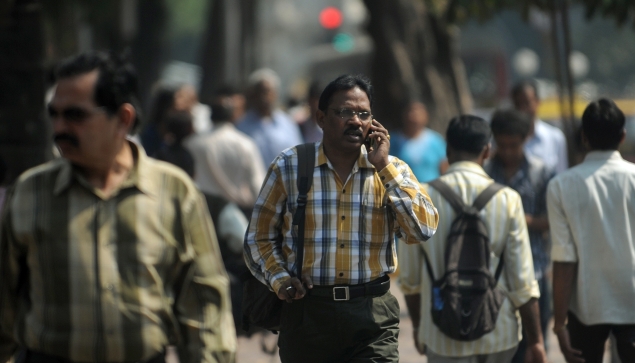
Tata Teleservices Ltd, India's sixth-biggest cellular carrier by customers, said it will surrender part of its CDMA mobile airwaves in all but two of its zones, after the government asked carriers to pay surcharges on airwaves.Tata Tele, 26 percent owned by Japan's NTT DoCoMo, said it has informed the telecommunications ministry that it will give up CDMA airwaves beyond 2.5 megahertz in 15 service areas, but retain 3.75 megahertz in the Delhi and Mumbai cities.
"The company stands committed to ensuring that this will not adversely affect network or service quality and is looking to deploy additional capex to offset the reduced spectrum availability," the company said in a statement.
It was not immediately known how much Tata Tele, which was required to pay more than $200 million in surcharges, would save by returning part of the airwaves. Tata Tele operates two separate networks based on the GSM and CDMA technology.
India has imposed surcharges totalling more than $4 billion on long-established carriers, after an overhaul in the country's airwave sale process, a move which carriers have challenged in courts and its execution has been halted.
Carriers operating on the popular GSM technology are required to pay surcharges on their airwave holding exceeding 4.4 megahertz, while for CDMA-based carriers the surcharges are imposed on holding beyond 2.5 megahertz.
Those companies who do not want to pay the surcharges have the option to give back the airwaves to the government.

Goodbye QWERTY, hello faster typing with KALQ

Goodbye QWERTY, hello faster typing with KALQ

holiday-mobile-app-635.jpg
Texting just got a lot easier! Researchers claim to have developed a new keyboard for touchscreens that allows superfast thumb-typing, enabling you to type 34 percent faster than on a QWERTY layout. The research team used computational optimisation techniques in conjunction with a model of thumb movement to search among millions of potential layouts before identifying one that yields superior performance.
Typing on today's mobile phones and tablets is needlessly slow. One limitation is that the QWERTY layout is ill-suited for tablets and other touchscreen devices when typing with the thumbs, researchers said.
Thumb typing is also ergonomically very different from typing on a physical keyboard.
Researchers said it has been established that normal users using a QWERTY on a touchscreen device are limited to typing at a rate of around 20 words per minute, which is slow compared to the rates achieved on physical keyboards.
The researchers from the Max Planck Institute for Informatics and colleagues from the University of St Andrews and Montana Tech initiated the process to develop a layout for two-thumb text entry with the goal of improving typing performance and minimising the strain for the thumbs.
"The key to optimising a keyboard for two thumbs is to minimise long sequences with a single thumb," lead researcher Antti Oulasvirta said.
"We also want to place frequently used letters centrally close to each other. Experienced typists move their thumbs simultaneously: While one is typing, the other is approaching its next target. We derived a predictive model of this behaviour for the optimisation method," said Oulasvirta.
The computational optimisation process had two goals: To minimise the moving time of the thumbs and to approximate alternating sides as well as possible.
In the new keyboard KALQ, all vowels, with the exception of the letter "y" are placed in the area for the right thumb, whereas the left thumb gets assigned more keys.
To fully benefit from this layout, the users were trained to move their thumbs simultaneously. While one thumb is typing, the other one can move to its next target.
Finally, researchers developed probabilistic error correction methods that took into account how thumbs move and also statistical knowledge about the texts users type.
With these improvements, users were able to reach 37 words per minute, which is the best ever reported for two-thumb typing on touchscreen devices, significantly more than the approximate 20 words on a split QWERTY for regular users.
Researchers said KALQ will be made available as a free app for Android-based smartphones at the beginning of May.

Google's new Motorola smartphones "very, very impressive": Schmidt

Google's new Motorola smartphones "very, very impressive": Schmidt

eric-google-logo-635.jpg
In the past few months, there have been no dearth of rumours regarding Google's Motorola building the 'X Phone'. Now Google Executive Chairman has added a dash of excitement to these rumours by stating that he has seen the smartphones coming up at Motorola and they are "very, very impressive."Schmidt made this remark while talking at the AllThingsD Dive Into Mobile conference. He further went to add,"They have a new set of products, which are phenomenal." He also mentioned that these smartphones should not be termed as just phones but "Think of it as phones-plus." We're not sure if that's a reference to the size of the phones, or their quality, but Schmidt has definitely added a new sense of anticipation towards the devices.
One reason to believe it is not a reference to the size of the phones are the comments made by Jim Wicks, Design Chief at Motorola. While talking to PC Magazine, Wicks said that the company will be launching stock Android devices. He further exclaimed, "if you like smaller form-factor devices or stock Android, you're going to be excited."
The current trend for smartphones is to have a larger screen size but looks like Motorola will not be looking at having "mega" screen and be more focussed on the Android experience for its forthcoming smartphones.
It is noteworthy, that Google completed its acquisition of Motorola in May 2012. Under the new management, Motorola had launched a line of RAZR smartphones, but Google executives maintain that these smartphones were built under the supervision of old management and they had negligible influence on what was churned out. Google even went out to state that Motorola smartphones lacked the "wow factor".
However, the company now plans to change the same. The company had earlier in the year roped in former Apple evangelist Guy Kawasaki. Kawasaki is reportedly focussing on product design, user interface, marketing and social media at Google and is expected to fuse in some enthusiasm in the Motorola brand.
Commenting about Android, Schmidt predicted at the Dive Into Mobile conference that in the coming six to nine months, there will be more than a billion devices running Android.
Schmidt also remarked that the search engine giant was "phenomenally happy" with the Facebook's Home app, which replaces the home screen on Android phones and said Google has no plans to block it.

Social media as breaking-news feed: Worse information, faster

Social media as breaking-news feed: Worse information, faster

commentary The unfolding of breaking news on social media can create a dangerous well of misinformation, witch-hunting, and egomaniacal info-spewing. Time for some ground rules for the Internet.
Binders Full of Women: One of the many non-news sites that accidentally libeled a high-schooler recently.
One of the many non-news sites that accidentally libeled a high-schooler in the rush to be a real-time news source.
Early this morning, the public Facebook page called Binders Full of Women apologized for posting Boston police scanner chatter that erroneously identified a missing Brown undergrad as a suspect in this week's Boston Marathon bombings. The Binders Full of Women feed author subsequently deleted the post. Earlier, in the midst of multiple other posts about the unfolding Watertown, Mass., manhunt and shootout that started last night, the author defensively noted that any misinformation must be excused because, "I am NOT a journalist, and I am only relaying information from the [Boston Police Department] scanner and news sources."
But in point of fact, why, exactly, is a public page dedicated to women's rights issues in America essentially live-blogging a suspect manhunt, warts and all, on Facebook? Not that the Facebook page (whose 319,000 followers all got the same misinformation) was the only offender.
Michael Skolnik, of hip-hop culture and news blog Global Grind also apologized on Twitter for publishing the name overheard from scanner chatter, which was also tweeted by many, many others who either heard it on police scanners or retweeted what they saw online.
And Reddit moderators were apologizing for kicking off the whole domino chain after their commenter community initially targeted the student, Sunil Tripathi, as a possible suspect, and then repeated the news that his name had been used on police scanners.
Meanwhile, a high-school track runner is afraid to leave his house because he was wrongly identified as a possible suspect in crowdsourced photos and by the New York Post. And this poor guy was briefly held, questioned, and released in Watertown last night, but not before he was identified all over Twitter as a "suspect on the ground."
If speed is the currency of the modern information era, misinformation is the increasingly high cost. Some, like Matthew Ingram at Paid Content, argue that journalism is made better by multiple sources. And certainly, high profile mistakes (and occasionally laughable coverage) by the likes of CNN, and downright irresponsible journalism by the New York Post, might seem to suggest that's true.
It's not. We have more information, but it's a morass of truths, half-truths, and what we used to call libel. It's fast, but it's bad. And bad information is a cancer that just keeps growing. I'd argue the opposite of Ingram: that the hyperintense pressure of real-time reporting from Twitter, crowdsourcing from Reddit, and constant mockery from an online community that is empirically skewed toward negativity and criticism is actually hurting journalism. It's making all the news worse.
Why is CNN reporting wrong information as soon as possible? Because if CNN reports that info 20 minutes after it showed up on Twitter, the network will be skewered as pathetically behind the times. But should CNN or Fox report erroneous information in the rush to keep up, the networks will be skewered with identical glee and ruthlessness, while Reddit's slanderous and speculative threads will be congratulated as collaborative crowdsourcing that, while it may lead to devastating mistakes early on, eventually lands on the truth.
What kind of ridiculous double standard is that?
We're still in the early stages of figuring out how to experience news on social media. I do agree that firsthand reports from witnesses, reporters on Twitter, and those to whom an event is actually happening are invaluable new sources of information. I agree that circulating official "have you seen this person" images on Reddit or anywhere else online is orders of magnitude more effective than the old days of nailing said posters to trees and outhouses. Social media and the Internet have a huge role to play in the future of news -- they may very well be the future of news. But right now, they're making news worse before they make it better.
So as we go forward, I'd like to suggest some social-media Ground Rules for Breaking News.
Rule #1: If you have a lot of followers and you want to help, direct people to reliable sources of information, like a police department feed, a news feed, or someone who's on the ground, as in the case of Danny Sullivan last night with Seth Mnookin and other local resources.
Rule #2: Do not, under any circumstances, broadcast the names or photos of alleged suspects before verification. Panicked police officers in the midst of a firefight, chase, manhunt, and explosions who are desperately shouting things over scanners do not count as verification.
Scanner apps rise to the Top 10 on iTunes. Put the scanner apps down, I beg you.
Rule #3: If you want to be involved, broadcast helpful information, not Any Information At All. If you're the Binders Full of Women Facebook page, tell your 319,000 followers how to donate blood in the aftermath of a bombing. Tell them to stay inside while the bombing suspect manhunt continues. Broadcast the number of the FBI tip line in case they see any suspicious information. You can be useful without trying to be a news wire.
Rule #4: Sometimes you are powerless and you do not have information. That's OK. It's not your job. The Internet doesn't make us a great, seething Collective Omniscient just because there are more eyeballs on what's happening. Information, unlike sending a tweet full of wrong information, still takes time. Just put down the computer and go to bed.

Nokia's wireless chargers perk up local coffee shops

Nokia's wireless chargers perk up local coffee shops

What will it take for wireless charging to catch on? Nokia and Coffee Bean and Tea Leaf shops hope that making stations public will do the trick.
Nokia and Coffee Bean launch wireless charging stations in San Francisco
Nokia's sponsored wireless charging station in a downtown San Francisco Coffee Bean shop.
Last September, Nokia kicked off the launch of its Nokia Lumia 920 with promises of exposing more people to wireless charging -- an available, but underused capability -- by bringing it to spots where people go.
Specifically, Nokia said it would sponsor wireless charging stations using the Qi protocol at Virgin America airport lounges and Coffee Bean and Tea Leaf stores.
Earlier this week, I finally saw Nokia's power-promotion installed at my favorite Coffee Bean location on San Francisco's busy Market Street. What a sorry sight it was.
Market Street is a bustling downtown location, so I'm not entirely surprised that Nokia's promotional sign is crammed in tight. Unfortunately, its image of the yellow Lumia 920 is only visible from a side angle, and almost completely obscured by customers and a table.
In front of the sign, the wooden, six-seater table in question houses two towers of power outlets and sports disintegrating printed paper urging you to lay your Qi-compatible phone down right there to give it a power top-up. (By the way, Qi is pronounced "chee.")

Nokia's wireless charging stations at Coffee Bean in SF
Is that smudged, disintegrating paper advertising Nokia's under-table charging stations? Ew.
Yet, there's no charging coil within the printed sheet of paper. Peek your head under the table (which I did, much to the horror of the people seated 'round the table) to see the deep grooves and troughs where the wireless charging pads are firmly inserted and bolted down.
Hiding the source of the charge is a great idea that boosts the chargers' aesthetics and makes the pricy units harder to steal. (Embedded stations also happen to be one future implementation of a second-generation wireless charging standard.)
However, why go to the effort of carving out perfect indentations if you're only going to use decomposing and coffee-stained notices to attract users, many of whom might not know if they have a Qi-enabled phone, let alone what Qi even is.
Nokia and Coffee Bean launch wireless charging stations in San Francisco
The Qi-enabled wireless chargers have been embedded beneath this work table.
So with that, let me offer some advice for future in-store demonstrations. Use paint, a large vinyl sticker, or some other laminate to denote the tabletop charging area. Put some effort into its graphics and font to make wireless charging as hip and modern as it really is.
And for heaven's sake, Nokia, or Coffee Bean, or whomever is in charge of this promotion, please do yourself a favor and have store clerks set up posters where they can do the most good promoting your actual product, the wireless charging phones you're trying to sell.

Great battery life and a slim body for only $799

Great battery life and a slim body for only $799


Average User Rating

The good: The Toshiba Satellite U845T is thin, with a decent brushed-aluminum body, a 128GB SSD, and better performance and battery life than the competition.
The bad: The keyboard has squeezed-down keys, a small spacebar, and some flex under heavy typing. The low screen resolution feels dated in a midsize laptop.
The bottom line: While it's not going to dazzle anyone, the Toshiba Satellite U845T is a great example of exactly how much laptop $799 should buy in 2013.

There's a reasonable chance you'll end up hearing about the Toshiba Satellite U845T on a semiregular basis from us. That's because, at $799 for a 14-inch laptop that's ultrabook-thin, with a touch screen, Intel Core i5 processor, and 128GB solid-state drive, it's about as middle-of-the-road as laptops get.
For the moment, that makes the U845T the perfect example of a midsize, midprice laptop, and thanks to a sharp aluminum design and lack of any overly annoying or deal-killing flaws, it may end up being our default laptop recommendation for a lot of readers.
This is an especially important comparison when we look at Atom-powered touch-screen laptop-tablet hybrids. Those systems usually have small screens, slow performance, and compromised designs, but can cost just as much when you include the optional keyboard docks and other accessories. A handful of Core i5 touch-screen laptops are available for about $100 less, usually with bulkier, plastic bodies, and adding $100-$200 gets you into premium territory, such as the Lenovo IdeaPad Yoga.
 
The U845T isn't perfect -- the keyboards on most Toshiba Satellite laptops are oddly squeezed, with especially small spacebars, and only one of the three USB ports is of the current 3.0 variety. But it's right in that midprice sweet spot, so if you're looking for a decent all-around laptop for under $800, this is a great place to start.

Price as reviewed $799
Processor 1.8GHz Intel Core i5-3337U
Memory 6GB, 1,600MHz DDR3
Hard drive 128GB SSD
Graphics Intel HD4000
Operating system Windows 8
Dimensions (WD) 9.1x13.5 inches
Height 0.8 inch
Screen size (diagonal) 14 inches
System weight / Weight with AC adapter 3.6 pounds / 4.2 pounds
Category Midsize
Design and features
If you think of a typical laptop design on the "nicer" side of the fence -- as opposed to the plastic, budget side -- you'll probably picture something that looks and feels a lot like the Toshiba Satellite U845T. Despite the midsize 14-inch screen, it's thin (0.8 inch), light (3.6 pounds), and solidly built. Spend more, and you can shave off some size and weight, but these 14- and 15-inch ultrabooks no matter what are sort of skirting the definition of everyday portability with their larger screens, as least compared with 13-inch models.
The brushed aluminum on the lid and keyboard tray is upscale without standing out. If you took the mirror-finish Toshiba logo off of the back of the lid, this could be a laptop from any number of PC makers. Open the lid, and the interior is minimalist, with only a couple of indicator lights and a backlit power button to accompany the touch pad and keyboard (OK, and a bunch of Intel, Energy Star, and EPEAT stickers).
 
The backlit keyboard has black keys set against a gray keyboard tray. Like other Toshiba Satellite laptops, the actual island-style keys are more rectangular than round, but the end effect is that each key is slightly squashed, giving the keyboard a cramped feel. Many Toshiba laptops have unusually short spacebars, as is the case here, which can interfere with some typing styles. Add a small but noticeable amount of flex in the center of the keyboard, and you get a keyboard that's usable, but not my favorite part of this laptop.
The large clickpad-style touch pad fares better. With no separate left and right mouse buttons, there's more room for multitouch gestures, and two-finger scrolling is reasonably smooth.
The 14-inch display is one of the few lower-end components here. The 1,366x768-pixel native resolution is on the low side for a midsize laptop, and henceforth we'll likely see this resolution in fewer and fewer laptops, outside of the least expensive budget systems. Interestingly, while the U845T has a touch screen (and a perfectly responsive one at that), this is one of the only touch-screen laptops without an edge-to-edge glass overlay over the entire inside surface of the lid.


Toshiba Satellite U845T Average for category [midsize]
Video HDMI VGA plus HDMI or DisplayPort
Audio Stereo speakers, headphone/microphone jacks Stereo speakers, headphone/microphone jacks
Data 1 USB 3.0, 2 USB 2.0, SD card reader 2 USB 3.0, 2 USB 2.0, SD card reader
Networking Ethernet, 802.11n Wi-Fi, Bluetooth Ethernet, 802.11n Wi-Fi, Bluetooth
Optical drive None DVD burner
Connections, performance, and battery
The U845T continues its streak as a perfectly average laptop, with a perfectly average collection of ports and connections. There's only one video output, HDMI in this case, and also only one USB 3.0 port (it has two USB 2.0 ports), but I always like getting a built-in Ethernet jack and separate audio-in and -out jacks. Note that the single USB 3.0 port is of the sleep-and-charge variety, which means it can use the laptop's battery to charge devices such as a phone, even when the laptop is asleep or powered off.
While this Satellite U845T is a fixed-configuration $799 laptop, Toshiba does offer another model, also for $799, that swaps out the 128GB SSD for a standard 500GB, 5,400rpm hard drive. If you need a lot of storage space, that might be a good idea, but I'd stick with the SSD for its advantages in speed, power consumption, weight, and heat.
With a 1.8GHz Intel Core i5-3337U CPU, the Satellite U845T performed a tiny bit better than some other recent slim midsize laptops in our benchmark tests, most of which have a slightly slower Core i5-3317U processor. But the performance difference is slight, and for everyday use -- Web surfing, social media, HD video playback, basic productivity -- you'd be hard-pressed to tell the difference.
 
One area where the U845T does stand out, however, is battery life. In our video playback battery drain test, the system ran for 6 hours and 4 minutes. Any laptop that tops 6 hours is impressive, and for a $799 14-incher, that's even more impressive. HP's similar Pavilion 15 Sleekbook ran for only a little more than 3 hours on the same test.
Conclusion
Every once in a while, a laptop comes along that's just a great example of what a shopper should be able to get for a specific price. While it doesn't massively overshadow what other PC makers offer in the same category, the Toshiba Satellite U845T is exactly what I'd hope for in a midsize $799 laptop right now. It's thin, with a decent brushed-aluminum body, a 128GB SSD, and even slightly better performance and battery life than the competition gives.

Multimedia multitasking test (in seconds)(Shorter bars indicate better performance)
Toshiba Satellite U845T-S4165
446 

Adobe Photoshop CS5 image-processing test (in seconds)(Shorter bars indicate better performance)
Toshiba Satellite U845T-S4165
241 

Apple iTunes encoding test (in seconds)(Shorter bars indicate better performance)
Toshiba Satellite U845T-S4165
121 

Video playback battery drain test (in minutes)(Longer bars indicate better performance)
Toshiba Satellite U845T-S4165
364 

Load test (average watts)(Shorter bars indicate better performance)
Toshiba Satellite U845T-S4165
39.4 

Friday, 12 April 2013

Today`s quotes

“The reason I talk to myself is because I’m the only one whose answers I accept.”

Tech companies may hire 50,000 less this fiscal

Tech companies may hire 50,000 less this fiscal


Tech companies may hire 50,000 less this fiscal India’s information technology industry is expected to generate between 1.3-1.5 lakh new jobs this financial year, as it slowly deploys the excess number of engineers hired last year when business growth turned out to be less than expected. The hiring estimates by industry body Nasscom pales in comparison to the just completed year when the industry created 1.88 lakh new jobs.

India’s IT and BPO sector provides direct employment to 30 lakh people. “Business is not growing in a linear fashion as we move up the value chain,” said Nasscom president Som Mittal. “Even with 1.30 lakh new jobs, still we are the largest employer.”
The $108-billion export-driven sector, however, is expected to see better growth in the current financial year, according to industry body Nasscom, which has pegged the growth at about 12-14 per cent compared to just about 10 per cent last year. Some of the larger companies like InfosysBSE 1.30 % and Wipro grew slower at half the industry pace, and are burdened with large ‘benches’ – engineers who are not working on any revenue generating projects.
While Infosys delayed the absorption of graduates hired from campuses by up to nine months, others like HCL have faced protests by engineering graduates who were selected from campuses in late 2011 but are awaiting joining dates.
The nature of services delivered by Indian IT firms are evolving, requiring less number of engineers as automation of work becomes common place.

Being a smart worker

Being a smart worker


Being a smart worker According to experts, it’s important to plan, multi-task, be adaptable and efficient to be a smart worker
Apeksha Kaushik, TimesJobs.com Bureau 
Edison said a genius is one percent inspiration and ninety nine percent perspiration. But, this philosophy seems to be changing in the context of a world where improvement, innovation and intelligence is the basic mantra for being a genius. Here a few experts advise you on how to work smartly and to achieve good results for yourself and your organisation. 
Be more adaptable to change. Every change gives you the opportunity to move ahead quicker than those who cannot adapt themselves to the change. As Ashish Arora, MD – HR Anexi puts it, “Change is inevitable, but one must learn to maintain focus on the current task while adapting to it. The best approach is to view change as an opportunity to improve yourself and your capabilities.”
Reducing timelines in everything you do. Try to cut out, reduce, speed-up or combine steps in your every day tasks to find more efficient and quicker ways of doing it. Affirmed Tejas Sheth, Country Manager, AsiaPowercom, “Working smart is the mantra. Things have to be done first time right. Time is no more a luxury; so, one will have to finish work in time. Manpower is becoming expensive. Hence, efficiency needs to be increased.”
Plan ahead as much as possible. Like the best chess players, think ahead and prepare yourself mentally before you take any step. This will help in saving time and avoiding costly mistakes. “A plan is your grip on the future. Planning ahead forces you to be clear and realistic about your goals. During implementation, you may find yourself adjusting to the dynamics of reality, but your plan can help you stay on track and serve as a fall back strategy,” says Arora.
Find role models. Be on the constant lookout for people who get more done in less time and with fewer resources than others. Learn from them. “Role models are essential for striking a chord of motivation within the workers for making them perform better by working smartly in the future. They act as a source of inspiration to make us perform our duties with unending zeal and zest,” said Alka Gupta, MD, British Academy for English Language (BAFEL).
Multitask wisely. Know when to multitask and when not to. It is smart to multitask with routine jobs, but detailed, risky and dangerous projects should be done one at a time. “Being jack of all trades is good, but that should not be an excuse to be mediocre at workplace. To make yourself stand out of the crowd you need to master at least in one discipline,” says Deepak Kaistha, Managing Partner- Planman HR.
Keep track of the latest technology. Allow technology to help you work harder at working smarter. “Internet and mobility has changed the way business is done. Technologies like data mining and analytics have enhanced the ability to understand customer and issues muck quicker and precise,” underlined Shibu Paul, Country National Sales Manager, Array Networks.
Learn from your mistakes. You’re smart if you can learn from your mistakes, you’re intelligent if you can learn from others mistakes – but you’re wise if you can do both. “Smart people learn from their own mistakes and wise people learn from others mistakes. The world has less patience, hence let’s become wiser fast,” says Sheth.
It’s hard work to even pick up these habits and to strike the much coveted balance between working hard and working smart!

20 weight loss foods in every Indian kitchen


20 weight loss foods in every Indian kitchen


20 weight loss foods in every Indian kitchen
Weight loss diets or weight loss foods do not require a 'special ingredient', they constitute foods that you see every day in your Indian kitchens.

These weight loss foods can be eaten directly or consumed in combination meals that you eat daily. Some health enthusiasts avoid typical Indian dishes that are are creamy and submerged in ghee or butter, but you can opt for healthy cooking methods using these same India-centric ingredients found in every Indian kitchen. These are weight loss foods common to Indian grocery markets and kitchens that can actually help you lose weight and gain health, using proper cooking methods.

Weight Loss Foods in Every Indian Kitchen #1

Moong dal

It is every Indian's favourite which ever class he/she comes from. This dal is full of Vitamin A, B, C and E and many minerals, such as calcium, iron and potassium. It is often advised by dieticians to replace fatty foods with Moon dal as it is a weight loss food that is rich in proteins and fibre, so one feels fuller after having a bowl of dal for a long time and curbs your cravings. Along with weight loss, moon dal it also benefits the metabolism, immune system and protects against fatal diseases.

Enjoy this weight loss food with chapattis or you can also have them as sprouts with a tbsp of chilli powder, chat masala, a tbsp of lemon juice and salt to taste

Weight Loss Foods in Every Indian Kitchen #2

Walnuts

As quoted by sciencedaily.com , according to U.S researcher, Joe Vinson of the University of Scranton, "Walnuts rank above peanuts, almonds, pecans, pistachios and other nuts. A handful of walnuts contains almost twice as much antioxidants as an equivalent amount of any other commonly consumed nut" This weight loss food tastes delicious and low in cholesterol. While consuming this weight loss food one needs to remember that these are high calorie food that needs to be eaten in moderation.

Just when you are sitting for you meal add this weight loss foods to your salads, they will add crunch and taste to your boring veggie!

Weight Loss Foods in Every Indian Kitchen #3

Spinach

This green veggie is rich in fiber, water, antioxidants, vitamins K and A, and minerals like magnesium, potassium, and iron. All this just in 10 calories per cup of this amazing weight loss food! One bowl of spinach will make you feel fuller and stab your food craving in your stomach itself. Spinach also helps in curing constipation, being a good source of fibre. It cleanses the digestive tract.

Nutritive Value per 100gms of edible portion
Calories ( kcal): 26
Proteins (gms): 2
Carbohydrates(gms): 2.9
Fat( gms): 0.7
Iron( mg): 1.14

If you aren't a big fan of this weight loss food, try our innovative spinach recipes to fall in love with spinach.

Weight Loss Foods in Every Indian Kitchen #4

Bitter gourd

No don't make that face, if you cook in the right way this bitter veggie can taste yummy too. This weight loss food is effective to reduce the total calorie you intake while having a meal so that you are eating fewer calories than you burn.

Bitter gourd is believed to contain hypoglycaemic or insulin like properties designated as plant - insulin which helps in lowering blood sugar levelsthios weight loss food is also beneficial in treating blood disorders like boils, itching, psoriasis and other fungal disorders

Use bitter gourd in low-calorie, filling recipes, such as vegetable soups or stews. Another option is to eat it as a side dish with lean protein, such as chicken breast, fish or a soy-based vegetarian burger.

When cooking bitter gourd, chop them and keep them in salted water for 5 mins, this will reduce the bitterness in the veggie. Then go ahead and use thme in stew and soups. You can also keep this weight loss food as a side dish with other lean protein Indian dishes.

Weight Loss Foods in Every Indian Kitchen #5

Beetroot

According to Livestrong, Andrew Jones and other researchers at the University of Exeter's School of Sport and Health Sciences, discovered that drinking beet juice gives your body a stamina boost allowing you to exercise longer and burn more calories.

Beets are a blood-building herb that detoxifies blood and renews it with minerals and natural sugars. They are high in potassium, folic acid, and fiber, yet low in calories. This weight loss food also aids in eliminating toxins from your body.

Their edible leaves offer protein, calcium, fiber, beta carotene, vitamins A and C, and some B vitamins. We always restrict them to salads, but did you know there are more ways to adding this beautiful vegetable to your palate.

Beetroot Juice
2 medium sized beetroots
2 oranges
5 slice of fresh pineapple
Lemon Juice
Mint - 1 small sprig

Method
Peel the beetroot, and the oranges. Peel and core the pineapple.Cut all the above into chunks, then add the lemon juice, and place in the blender.Blend for 45 seconds or until smooth. Strain and serve, garnished with mint.

Weight Loss Foods in Every Indian Kitchen #6

Almonds

A study from the University of Toronto found that people who ate almonds with white bread didn't experience the same blood sugar surges as those who ate just the slice. And the higher blood sugar levels rise, the lower they fall; that dip leads to hunger, causing people to overeat. Plus, blood sugar changes cause the body to make insulin, which can increase abdominal fats.

This weight loss food is rich with important nutrients like monosaturated fats, vitamin E, folic acid, protein and dietary fibre. Almonds works best as a quick healthy snack when you are travelling or at your office desk, or the moment when you want to hog to something unhealthy. This weight loss food also keeps your blood sugar steady.

Weight Loss Foods in Every Indian Kitchen #7

Apples

According to self.com, a study from Penn State University at University Park revealed that people who chomped an apple before a pasta meal ate fewer calories overall than those who had a different snack.

Apple is one of the best weight loss foods, having this great fruit a day not only keeps the doctor away but also makes you skinnier. With 4 gms of fiber in a medium apple, they can make you feel fuller for a longer time as the fiber take time to break down. Apples are a sweet and crunchy snack full of all sorts of nutritional goodness, and they taste good on their own and in salads, desserts, and savory dishes, too.

Weight Loss Foods in Every Indian Kitchen #8

Black Beans

Beans stay in your digestive system longer and add to the feeling of fullness and a satisfied feeling, aiding weight loss. They contain soluble and insoluble fiber, protein, and a type of fat-burning carb called resistant starch. Black beans are really one of the greatest weight loss foods.

According to data from the National Health and Nutrition Examination Survey, bean eaters weigh less and have slimmer middles.They are a 'heart healthy' addition to any diet as they contain an abundance of soluble fiber, which can lower cholesterol and triglyceride levels.

Weight Loss Foods in Every Indian Kitchen #9

Cauliflower

However beautiful this veggie looks it is as strong enough to fight toxic compounds in your body. This weight loss food is rich is indoles, glucosinolates and thiocyanates that bumps off all the toxic waste in your body. Cauliflower is low in calories while still offering filling fiber. This veggie is also super versatile and can make a great replacement for heavier foods.

Weight Loss Foods in Every Indian Kitchen #10

Cinnamon

Everything is nice about this weight loss food. Just 1/2 teaspoon each day can help control your blood sugar and prevent the post meal insulin spike that can trigger your body to store fat rather than burn it. This nutty flavor spice is also know for its diabetes fighting properties, cinnamon can work wonders for your sweet tooth while keeping you at a safe distance from fatty sugars and desserts. Cinnamon promotes effective blood circulation, which helps your body get fitter faster.

Add ground cinnamon as a replacement for sugar in cake dough or in your tea and coffee to get the most out of this wonderful spice every day.

Weight Loss Foods in Every Indian Kitchen #11

Turmeric

A clear favourite in Indian kitchens, turmeric wins the day when we talk about spices that aid digestion and weight loss. Curcumin, a phenol found in turmeric helps keep fatty tissue at a minimum. Adding turmeric to your daily diet will help weight loss in the long run.

This weight loss food when used in the optimum dose is highly effective in soothing gastric inflammation and ulceration, which could be the key to developing new drugs against such stomach disorders, say Indian scientists.

Weight Loss Foods in Every Indian Kitchen #12

Raddish

Like other types of vegetables, cooked raddish contains approximately 3 grams of fiber per half cup to help you stay full and satisfied. Raddish are considered as starchy vegetables, so it is recommended to be eaten in place of rice, bread or other starchy foods. They work best as weight loss foods.

Enjoy a crunchy raddish in your salad with chopped cucumber and tomatoes.

Weight Loss Foods in Every Indian Kitchen #13

Garlic

Overweight people who sprinkled their food with the zero-calorie spice lost an average of 30 pounds in six months, compared to only a 2-pound loss in the control group. This much loved Indian ingredient is used widely in almost all recipes and gravies.

Allicin in garlic is considered effective for fighting high cholesterol, high insulin and unhealthy blood sugar levels. Additionally, garlic is a great appetite controller - perfect for healthy weight loss.

This weight loss food also help prevent various cancers, fight cardiovascular diseases and diabetes and respiratory problems. Garlic also helps fight various infections.

Weight Loss Foods in Every Indian Kitchen #14

Lentils

Lentils is the fastest and easy to prepare food for mothers, while being the most popular ingredient in Indian kitchens. These daals can reduce your chances of a heart attack, stabilise sugar count and help in weight loss.

Lentils are a bona fide belly flattener. They're high in protein and soluble fiber, two nutrients that stabilize blood sugar levels. Eating them helps prevent insulin spikes that cause your body to create excess fat, especially in the abdominal area.

This weight loss food is perfect for diabetes patients and at the same time improve your iron level and source for vitamin B. It is not only a comfort food but also a good protein source vegetarians.

Weight Loss Foods in Every Indian Kitchen #15

Bananas

According to HMU expert Arnav Sarkar, Bananas are part of a healthy diet, and should also be part of a fat loss diet, however no food by itself helps one to lose weight. To lose weight one has to create a caloric deficit i.e to burn more calories than what they consume in a day.

For most cases a caloric deficit of 10-15% works best and ones that create a greater caloric deficit generally causes more muscle loss rather than fat loss.

For starters bananas offer healthy carbs which give energy to be more active and feel great. It is also high in the mineral potassium which helps to lower blood pressure. The fiber content of bananas helps to control hunger much better for those who are trying to lose fat. And it has also been found to help students study better thanks to its supply of the vitamin B6.

Some more benefits of bananas - It has been found to help reduce depression due to its content of Tryptophan, the iron content in it helps those with anemia and it also helps to reduce constipation due to its fiber content.

Breakfast is the best time to have this fruit. You can chop bananas in a bowl, add milk and a few strawberries.

Weight Loss Foods in Every Indian Kitchen #15

Tomatoes

This beautiful looking veggie works best in every Indian recipe and also as a weight loss food, every time you munch on a tomato, your body releases a hormone called cholecystokinin, which tightens the valve between your stomach and your intestine. As a result, CCK boosts feelings of fullness—making you less apt to overeat.

This weight loss food boosts your energy, stabilizes your blood sugar levels, controls your appetite, detoxifies your body and reduces cholesterol. Tomatoes are also low in calories, a plus for any dieter.

When using tomatoes in your dishes, avoid mixing thme with bread, pasta, potatoes or rice, as this combination can cause acidity.

Weight Loss Foods in Every Indian Kitchen #16

Olive oil

Olive oil has healthy fat that increases satiety, taming your appetite. But that's hardly its only slimming feature.

Olive oil contains antioxidant - polyphenols. They help the body in detoxify unbalanced molecules, otherwise called - free radicals. This weight loss oil is an excellent remedy for rheumatoid arthritis. Various published studies speak of these rheumatoid arthritis fighting properties.

Research shows it has anti-inflammatory properties, and chronic inflammation in the body is linked to metabolic syndrome. Drizzle your salad with olive oil and you'll increase the antioxidant power of your veggies, a study published in the British Journal of Nutrition notes.

Weight Loss Foods in Every Indian Kitchen #17

Cabbage

This weight loss food is found on every continent, so you have no excuses to shy away from this green leafy ball. Cabbage is the ideal veggie for constipation, skin and eye disorders, aging, stomach ulcers and Alzheimer's to name a few. Detox with patta ghobi; it is a good blood purifier as well.

It's very low in calories and high in fiber. Add to that, cabbage is way low on the GL scale too. This weight loss veggie doesn't just help you lose weight. is also a surprisingly excellent source of vitamin C, which some experts believe may reduce the risk of developing diabetes.

Weight Loss Foods in Every Indian Kitchen #18

Eggs

Eggs are a good source of vitamins, proteins and minerals. Eggs are not only a great source of nutrition, but also very useful to help lose weight. When combining eggs with other dishes you will limit the consumption of complex carbohydrates in the body.

Egg itself is sufficient in helping in weight loss.

Weight Loss Foods in Every Indian Kitchen #12

Coffee

The caffeine in coffee can raise your resting metabolic rate by about 15 percent, and the effect can last up to four hours—that adds up to 30 to 50 calories burned per day. Plus, people who sip 3 to 4 cups of regular or decaf coffee per day are 30 percent less prone to type 2 diabetes.

Weight Loss Foods in Every Indian Kitchen #20

Pears

Pears deliver a dose of fiber (about 5.5 grams per medium-sized fruit), which helps keep you satisfied long after you eat them. But that's not where their fat-fighting power ends.

A Brazilian research team found that a group of women who included pears in their diet each day lost more weight than the group who included oat cookies—even though the pears and the oat cookies had the same number of calories.

Being Too Active On Social Media May Damage Your Relationships


Being Too Active On Social Media May Damage Your Relationships


London: Engaging in too much social media activity may damage strong relationships, a new Oxford study has warned.


Research by Dr Bernie Hogan of Oxford University tested the theory of 'media multiplexity' (the ability to communicate via several communications channels) which was first posed in 2005.


The theory suggests that there is a clear link between the number of media channels used to communicate, the frequency they are used and the strength of relationship ties.


"This theory was first put forward in an era of email, chat and telephone conversations. However, we are now firmly in the age of digital communication with social media really taking off," Hogan said.


"We wanted to see if these more diverse communications channels strengthened relationship ties in the digital era," Hogan added.


Over 24,000 people in marital relationships took part in the new research, using 10 media channels.


"We found that those using more media tend to report no greater relationship satisfaction and some even reported decreasing satisfaction," Hogan said.


"This work suggests that media, which now includes online social media, still operates as a signal of ties of strength in relationships.


"However there may be a cut-off point after which the increasing complexity of maintaining so many separate communications threads starts to undermine relationship ties," Hogan said.


The study was presented at the Annual Conference of the British Psychological Society in Harrogate.


HTML Comment Box is loading comments...
MARUTHU Copyright@2014. Powered by Blogger.